

Who gets to shape the future?
On 16th October, the Irish Government will host its International AI Summit, bringing together political leaders, technology companies and academic institutions to discuss the future of artificial intelligence.
But there’s another conversation that needs to happen.
On 10th and 11th October, the Digital and Techworker Alliance (DATA) will host the Workers’ AI Counter Summit to put workers at the centre of the debate about power, AI, technology and the future of work at CWU Headquarters, 575 North Circular Road, Dublin 1.
Bosses and politicians are using AI as a way to reshape our workplaces, public services and everyday lives. It is influencing how work is organised, how decisions are made and what jobs look like.
Workers should not and cannot be left out of those decisions.
Workers Against Slopaganda
Our tagline, “Workers Against Slopaganda” reflects our aim – this is not a blanket rejection of technology.
We are challenging the idea that AI should be developed and deployed simply for profit, regardless of its impact on workers and communities.
We want to create space for critical voices, refusal of tech products that oppose our social interests, a rejection of Big Tech’s desire to achieve AI profitability at all costs.
The people who build, maintain, deploy, use and live with these technologies have vital expertise about how AI is reshaping work and society.
Their voices belong at the centre of the conversation.
Shape the Agenda
The programme is now being developed, and we want workers, organisers, researchers, creatives and communities to help shape it.
We are looking for contributions including:
- Workplace experiences
- Research and policy analysis
- Organising campaigns
- Practical workshops
- Panel discussions
- Demonstrations
- Artistic and creative work
- Music, film and performance
- Ideas that challenge dominant assumptions about AI and technological change
What Big Tech doesn’t want workers asking about AI
Is AI a tool or is it a product?
How is AI changing work in practice?
Who decides how AI is introduced into our workplaces?
What role should collective bargaining play in technological change?
What would democratic governance of AI look like?
What kinds of technology do workers and communities actually want?
How are people already organising around these issues?
How is tech and AI reshaping democracy?
Submit Your Contribution
The call for contributions is open now and closes on 1 September.
Whether you have a workplace experience to share, a campaign to showcase, a workshop idea, research to present or a creative contribution to make, we want to hear from you.
Help us build a Workers’ AI Summit that puts workers’ voices, experiences and demands at the centre.
Hosted by DATA-CWU
Submit your contribution at etech@cwu.ie
Workers should not just be consulted about the future of AI. Workers should shape it.
Guest Speakers
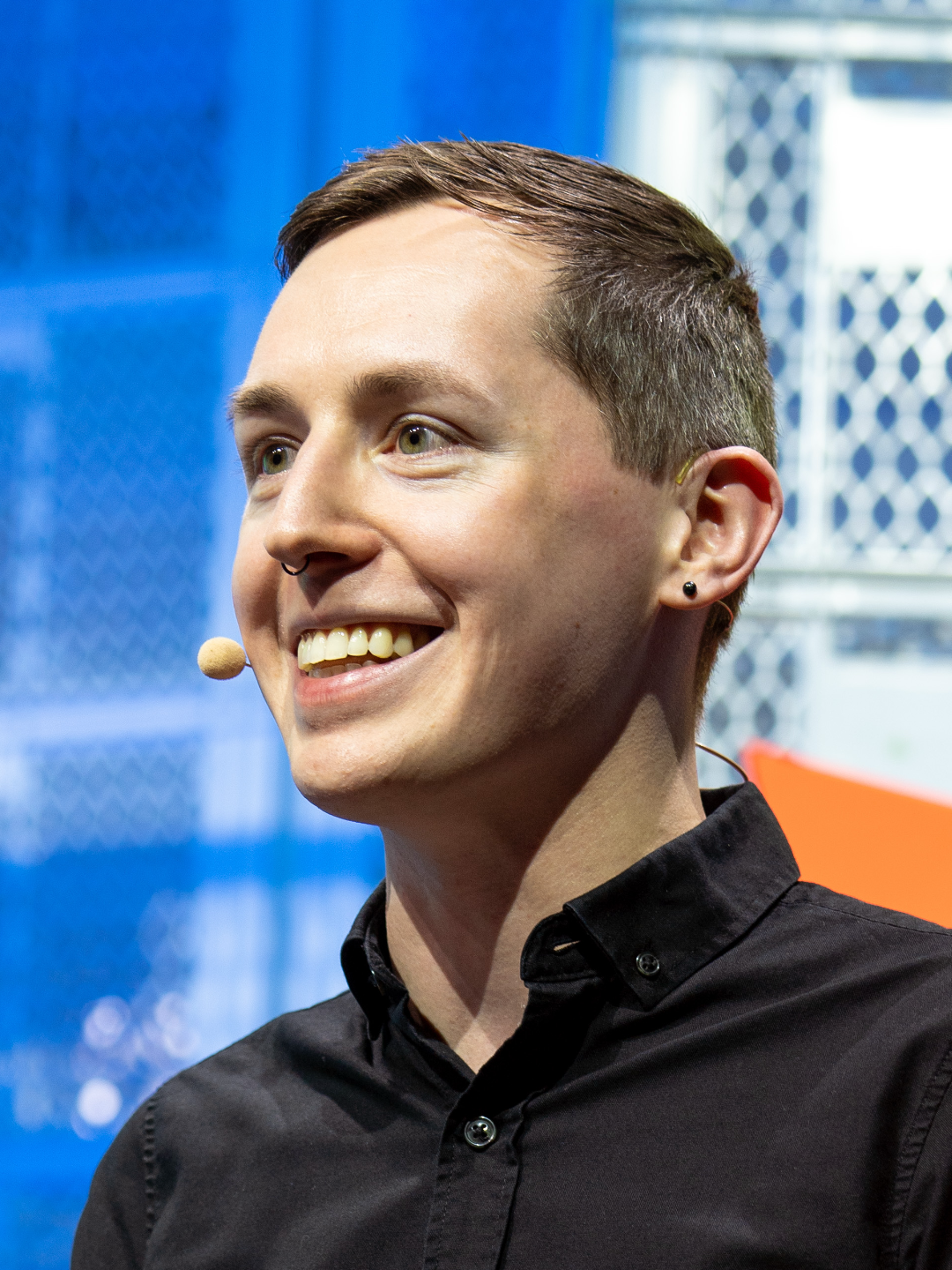
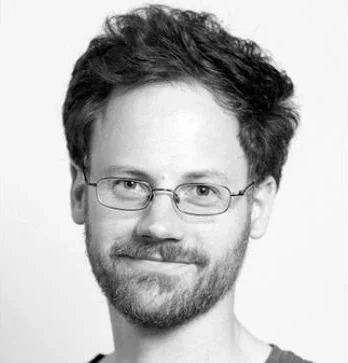
Paris Marx
Journalist, author and host of Tech Won’t Save Us
Paris Marx is a technology writer, journalist and host of the Tech Won’t Save Us podcast, exploring the political and social impacts of the tech industry. He is the author of Road to Nowhere and the forthcoming Hyperscale: The Ambition and Excess of Big Tech’s Data Empires, which examines the infrastructure, resources and communities behind Big Tech’s rapid expansion.
Paris will join the Workers’ AI Counter Summit hosted by the Digital and Techworker Alliance (DATA) to discuss Hyperscale and the growing power and impact of Big Tech’s data infrastructure.
Dr. Abeba Birhane
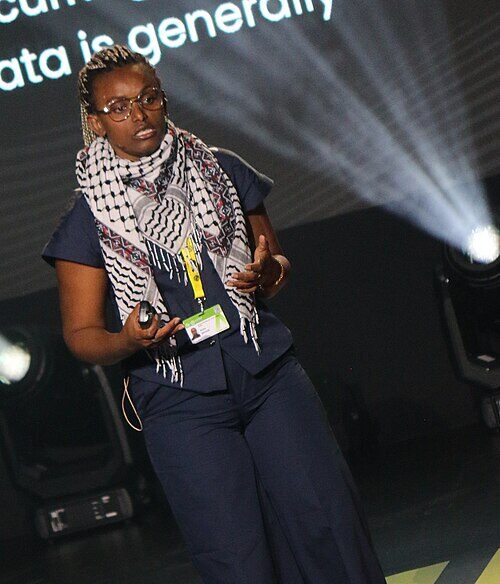
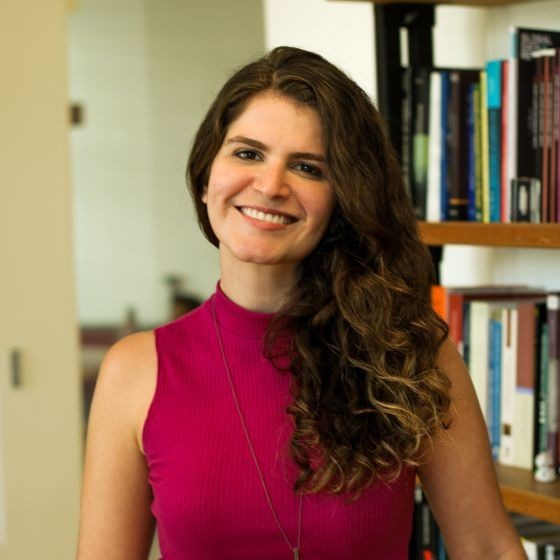
Dr. Abeba Birhane is a cognitive scientist and AI researcher whose work focuses on AI, data, ethics and accountability. She is the Director of the Trinity College Dublin AI Accountability Lab, researching the social and political impacts of AI and the often-invisible workers whose labour underpins AI systems.
Abeba will join the Workers’ AI Counter Summit hosted by the Digital and Techworker Alliance (DATA) to explore the central role of data workers in the AI industry and why their work and experiences must be part of conversations about the future of AI.
Sonia Fereidooni
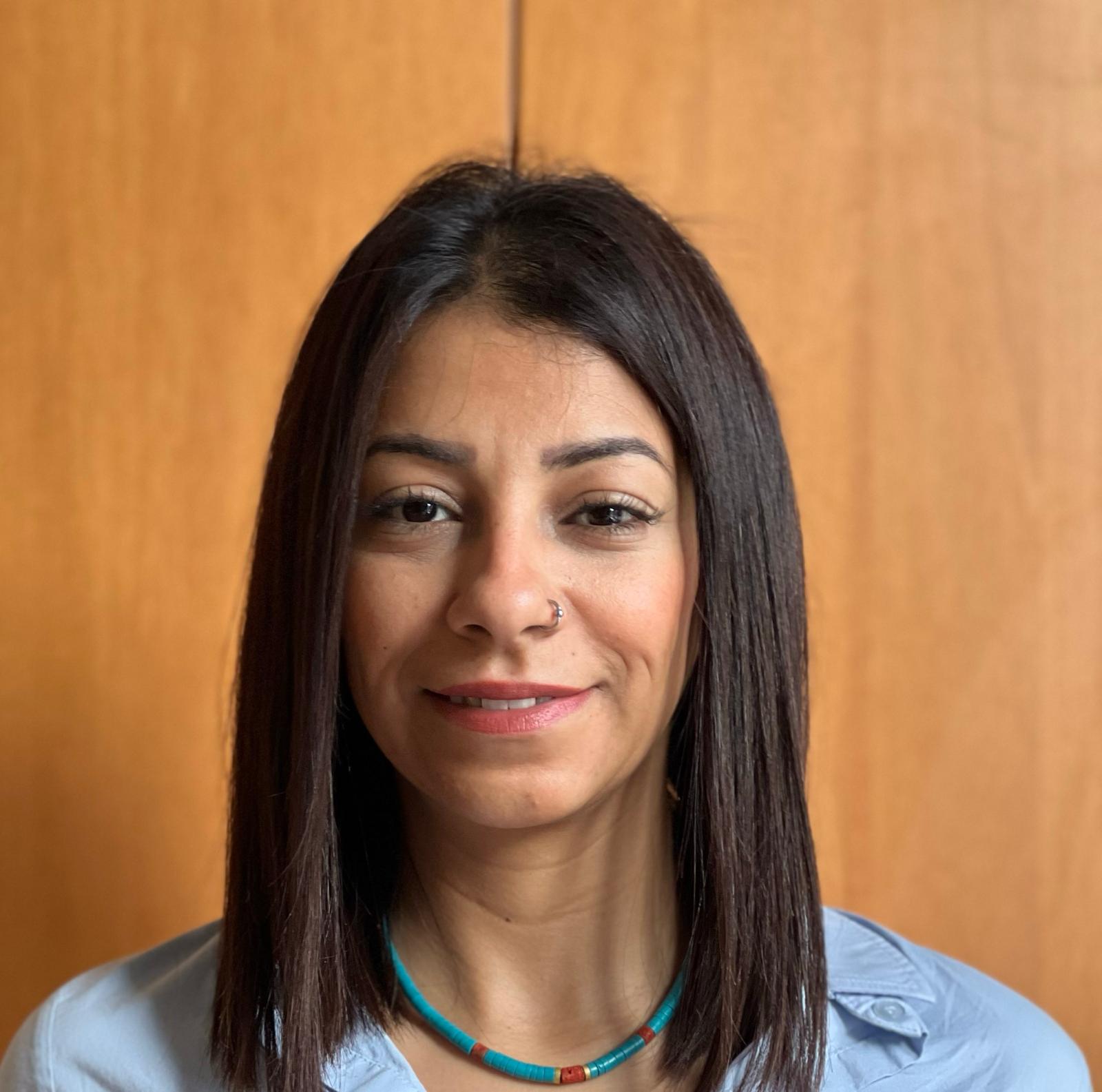
Sonia Fereidooni is a member of No Tech for Apartheid (NOTA) and United Tech and Allied Workers (UTAW), and a PhD Candidate at the University of Cambridge. Her work explores technology, labour organising and the political questions surrounding the development and use of AI.
Sonia will join the Workers’ AI Counter Summit hosted by the Digital and Techworker Alliance (DATA) to discuss the Google DeepMind union drive and AI accountability, exploring how tech workers can organise and have a say in the systems they build.
Civil Society Panel Speakers
Misa Norigami
Misa Norigami is a corporate researcher at SOMO. She investigates corporate structures, ownership, supply chains, and finances of multinational companies to hold excessive corporate power to account. She also researches the power of Big Tech companies, most recently focusing on data centres.
Misa will join the Workers’ AI Counter Summit for the panel “AI boom, power for whom? Recentering fundamental rights and people’s voices in AI governance,” exploring the human rights, social and environmental impacts of AI and how people and communities can shape its governance.
Bárbara Simão
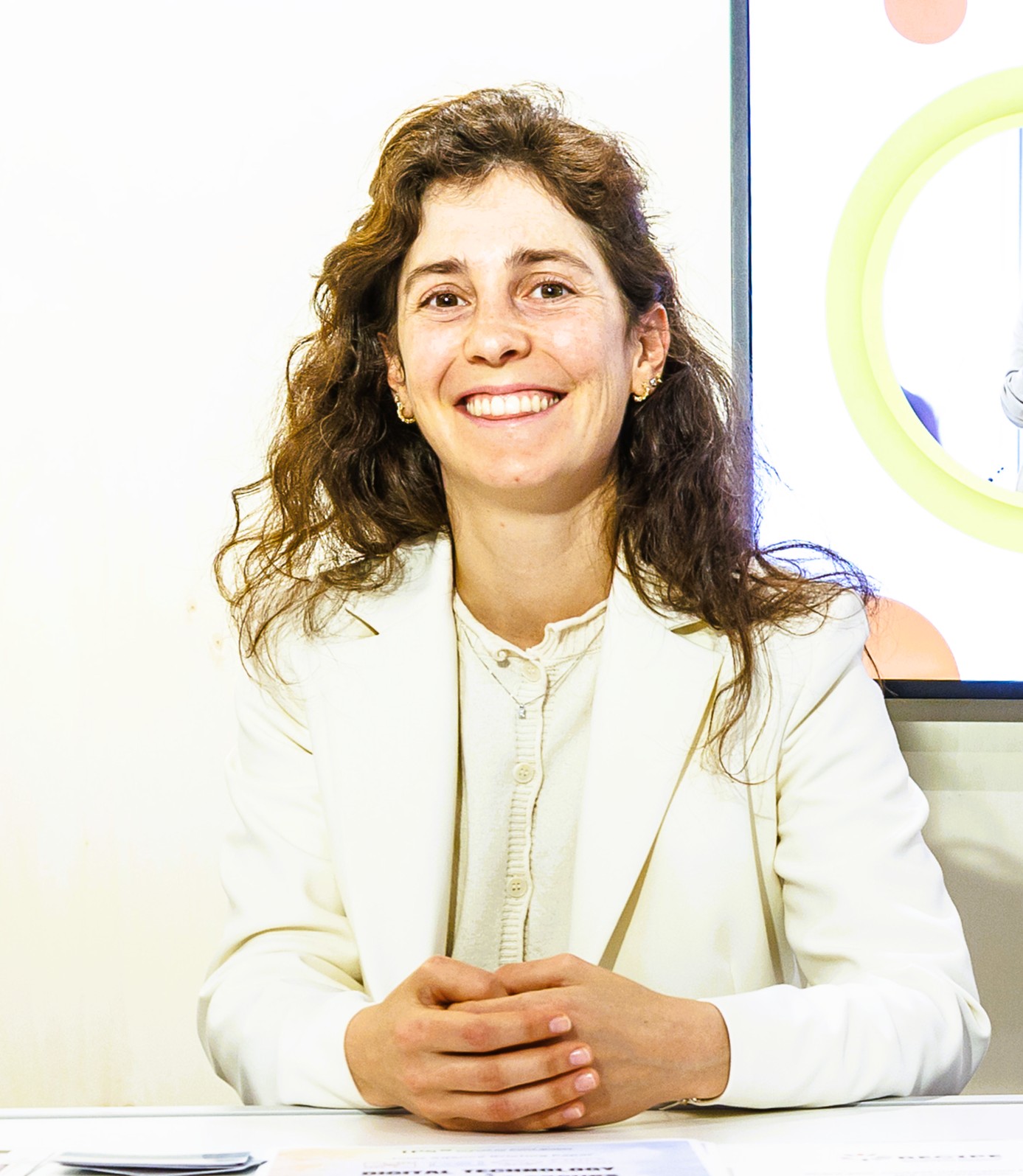
Bárbara Simão is a Programme Officer with ARTICLE 19, working on the governance and regulation of data-intensive technologies, with a focus on AI and digital infrastructures in the public sector. A lawyer specialising in public policy and digital rights, she has previously worked with organisations including the Brazilian Institute for Consumer Defence (Idec) and InternetLab.
Bárbara will join the Workers’ AI Counter Summit for the panel “AI boom, power for whom? Recentering fundamental rights and people’s voices in AI governance,” exploring how human rights and people’s voices can shape the governance of AI.
Lama Nazeeh
Lama Nazeeh is a Palestinian lawyer and human rights advocate, and Advocacy Manager at 7amleh, The Arab Center for the Advancement of Social Media. Her work focuses on platform accountability, EU policy and digital rights, with a particular focus on Palestinian rights online.
Lama will join the Workers’ AI Counter Summit for the panel “AI boom, power for whom? Recentering fundamental rights and people’s voices in AI governance,” exploring how human rights and people’s voices can shape the governance of AI.
Dr. Patrick Bresnihan
Dr. Patrick Bresnihan is an Associate Professor of Geography at Maynooth University, whose work examines the politics of climate, land and infrastructure in Ireland, alongside questions of development and the green transition.
He is co-author of From the Bog to the Cloud and All We Want is the Earth, and recently contributed to the report How We All Pay for Big Tech, examining the social, economic and environmental costs of data centres in Ireland.
Patrick will join the Workers’ AI Counter Summit for the panel “AI boom, power for whom? Recentering fundamental rights and people’s voices in AI governance,” exploring how human rights and people’s voices can shape the governance of AI.
Mia Marzotto
Mia Marzotto is the Digital Rights Advocacy Lead at Oxfam Ireland, where she works to promote a rights-respecting digital ecosystem and amplify the voices of civil society organisations. Her previous work includes whistleblower protection and humanitarian and development policy.
Mia will join the Workers’ AI Counter Summit for the panel “AI boom, power for whom? Recentering fundamental rights and people’s voices in AI governance,” exploring how human rights and people’s voices can shape the governance of AI.
AI and Translation Panel
Trish Van Bolderen
Trish Van Bolderen is Chairperson of the Association of Translators and Interpreters Ireland (ATII). She has a PhD in Translation Studies from the University of Ottawa and over 15 years’ experience as a language professional. An ATII Professional Member and active Translation Studies scholar, Trish lectures in translation at Dublin City University and freelances as a translator and reviser with her company BolderWords.
Nick Bennett
Nick has worked as a freelance Japanese-English and French-English translator for 28 years before his business was so badly impacted by AI that he packed away his dictionaries and joined Covalen as a generative AI data annotator for META projects in 2024. He managed to survive one round of redundancies in January 2026 by being redeployed to the French team, but was unable to escape a second larger swathe of redundancies in June 2026.
In both rounds, he was elected as an Employee Representative during the so-called redundancy period. These experiences have turned him into a committed DATA-CWU member keen to protect the rights of other tech workers in similar situations.
Workshops
Arkadia Jacob
Arkadia Jacob has worked alongside unionised workers in the Covalen AI annotator campaign, supporting worker-led organising, protests and strikes through creative campaigning and communications. Their work explores how art, design and collective creativity can strengthen campaigns and bring people together.
At the Workers’ AI Counter Summit, Arcadia will lead “Art in Anti-Generative AI Resistance”, a talk and creative workshop exploring how workers and communities can use human-made art, writing and self-expression as tools for organising and resistance.
James Anderson
Media
Ghost in the Machine
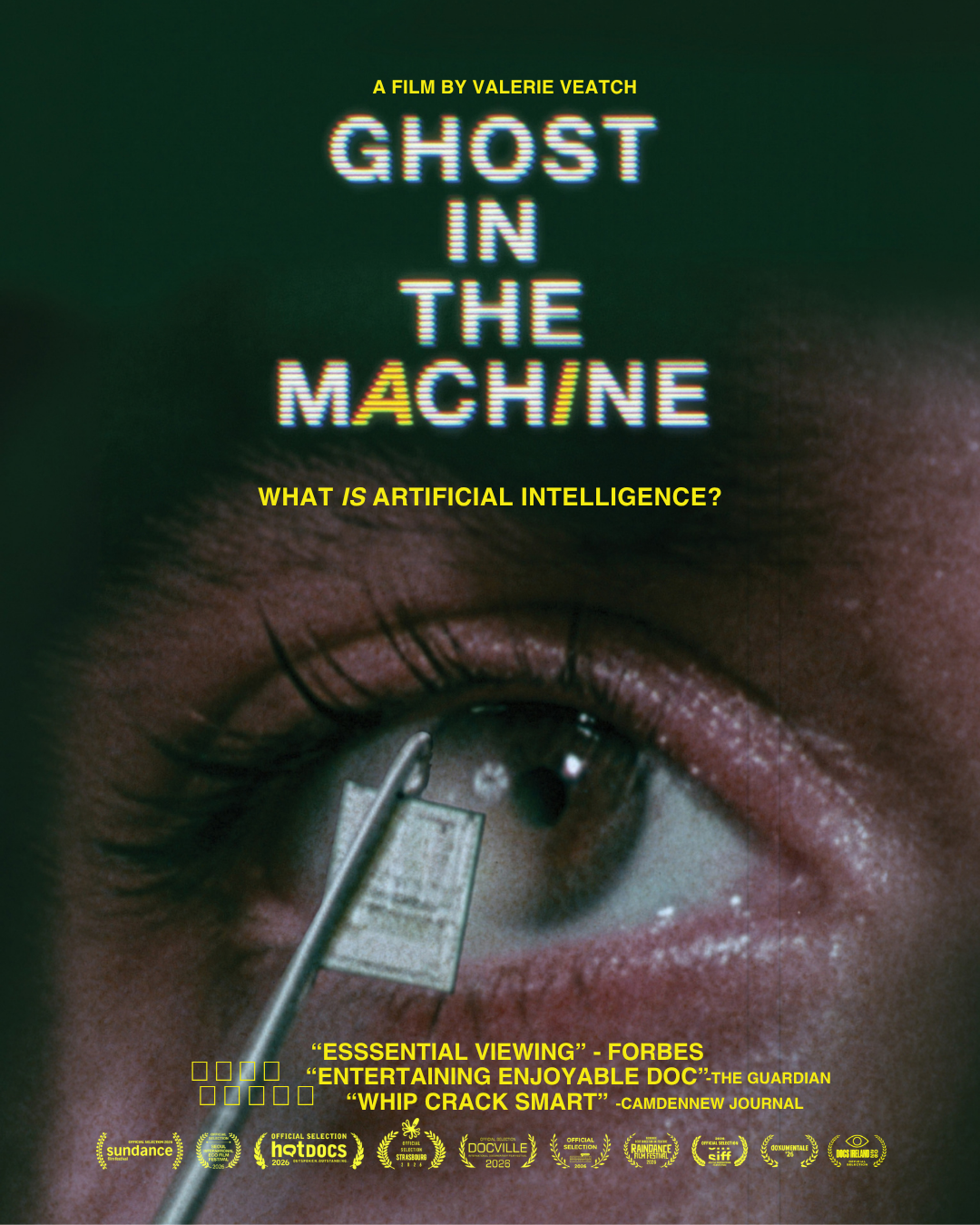
As part of the Workers’ AI Counter Summit, we’ll be screening Ghost in the Machine, a visceral investigative essay documentary from director Valerie Veatch, whose past Sundance-premiering films Me @ the Zoo (HBO) and Love Child (HBO) explore how emerging technologies reshape identity, culture, and global power. This new film is her most ambitious work yet – over eight chapters, Veatch helms an urgent excavation of the philosophical, cultural, and political forces driving the global AI boom.
Watch the trailer
Please see their official website for more information or click here